The Charter For Communities
We believe in community rights – and that people are the solution, not the problem.

Our Charter gives communities both protections and opportunities to drive positive change in our local areas.
Write to your MP
In July 2025, The Government introduced the England Devolution and Community Empowerment Bill, with an aim being to ‘give communities stronger tools to shape their local areas’. The Community Charter gives people and places the basic rights they need to shape local decisions, protect their environment, and build healthier, fairer communities.
Write to your MP to tell them you support the inclusion of the Community Charter in the Devolution and Community Empowerment Bill.
About the Charter for Communities
Communities across England face big challenges — from the climate crisis and poor housing to disconnection and division. Too often, decisions are made far away in Whitehall, leaving local voices unheard.
Our Community Charter recognises that people are already creating solutions — from community energy to housing projects, green spaces and local initiatives that bring people together. With the right support, these efforts can strengthen our health, wellbeing and democracy.
Why It Matters
• Communities are often treated as problems to manage, rather than partners in shaping the future.
• Local voices are sidelined as decision making is centralised.
• The government’s Devolution and Community Empowerment Bill fails to give people real power over their own places.
• Our Charter shifts the balance. It gives people the rights they need to protect where they live, influence decisions, and build thriving, connected communities.
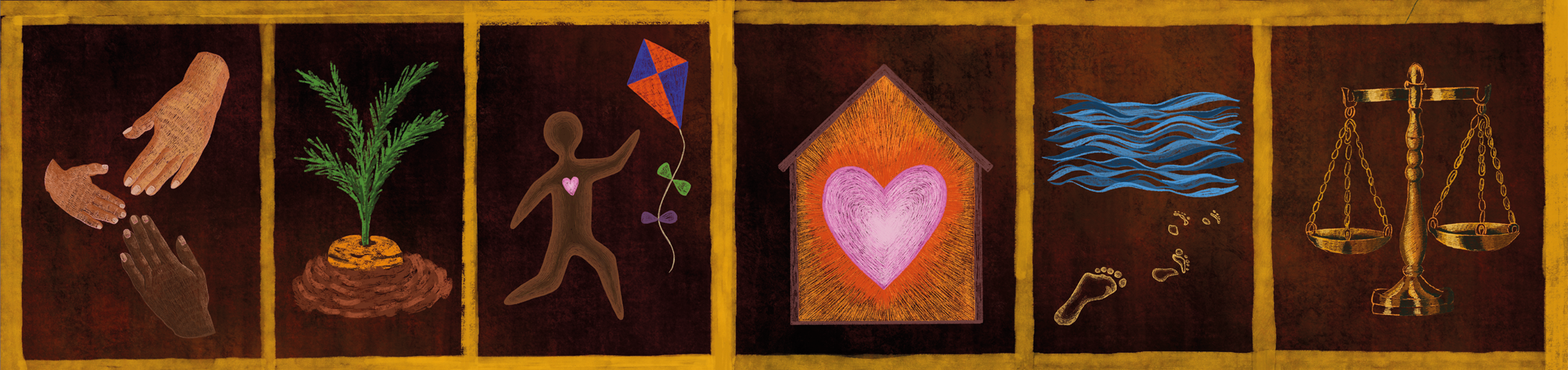
The Seven Rights
The Charter draws on international law and existing models of good practice. All are credible, achievable and already recognised elsewhere — just not yet implemented in England.
1. A clean and healthy environment (UN human right, 2022)
2. A healthy home (drafted into UK legislation but not yet passed)
3. The right to play (UN Convention on the Rights of the Child)
4. The right to grow food on public land (proposed in previous UK planning amendments)
5. The right to roam and swim (already law in Scotland)
6. A voice in local decisions (Aarhus Convention, now an EU directive)
7. The right to challenge decisions (in line with Aarhus principles and earlier UK proposals)
What’s Next
This Charter is an invitation to rethink how we work together — government and citizens, state and community. It builds on international conventions and proven ideas, but places people and places at the heart of decision-making.
By recognising these rights, we can unleash the energy of communities to create fairer, healthier and more hopeful futures.
This charter has been developed by people who care about who makes the decisions that affect the places we live. Find out more about Rights Community Action and sign up to our subscriber list here
For any queries, please email charter@rightscommunityaction.co.uk.
Signatures
Decisions that affect the community should be made by that community. Considerations of climate change, sustainability, infrastructure, green spaces and the environment should take priority.
Sarah BWe need to support this Charter and to do the same in our own local authority.
Johnny HCommunitoes live in developments, not developers. All future developments should be guided by the needs of the community and sustainable future living considerations. Profiteering and railroading needs to be a thing of the past!
Niki GIt's so great to have a positive vision for what we want planning to do – rather than always defending it against the latest attack.
Dave PPlanning rules are so important to a community, to control the environment we want to live in. This should be a community decision, not developers and Whitehall.
Joanna WI am trying to save a mosaic of habitats ( wood and scrub land and a large reed-bed) from being used as a building site.
Jenny WThirty years campaigning in King's Cross on planning issues (1983 to 2014) taught me the importance of local input. Islington Council (where I lived) was very good by and large at involving and respecting local people's input, Camden Council less so. With Islington's support we were able first to defeat the plan…
Diana SWe live in a busy seaside area in Thanet with no industry just farming. We need these fields we have left for food production. Our infrastructure is already overloaded and houses are being built all over, especially at Westwood.
Angela WIt is amazing that those who don't live in an area and have no vested interest in ensuring the needs of the residents are met and that they have a say in what happens are are making decisions which are life-changing. How is this democratic?
D SThe Planning system MUST listen to the local community whom have a real vested interest in the areas where they live. It’s called Community and that is the strength that binds people together. Covid has shown how important our Green Spaces and Greenbelt are to communities. Handing over power…
Paul S